

Permitting Reform or Carbon Windfall? DOE Opens the Express Lane

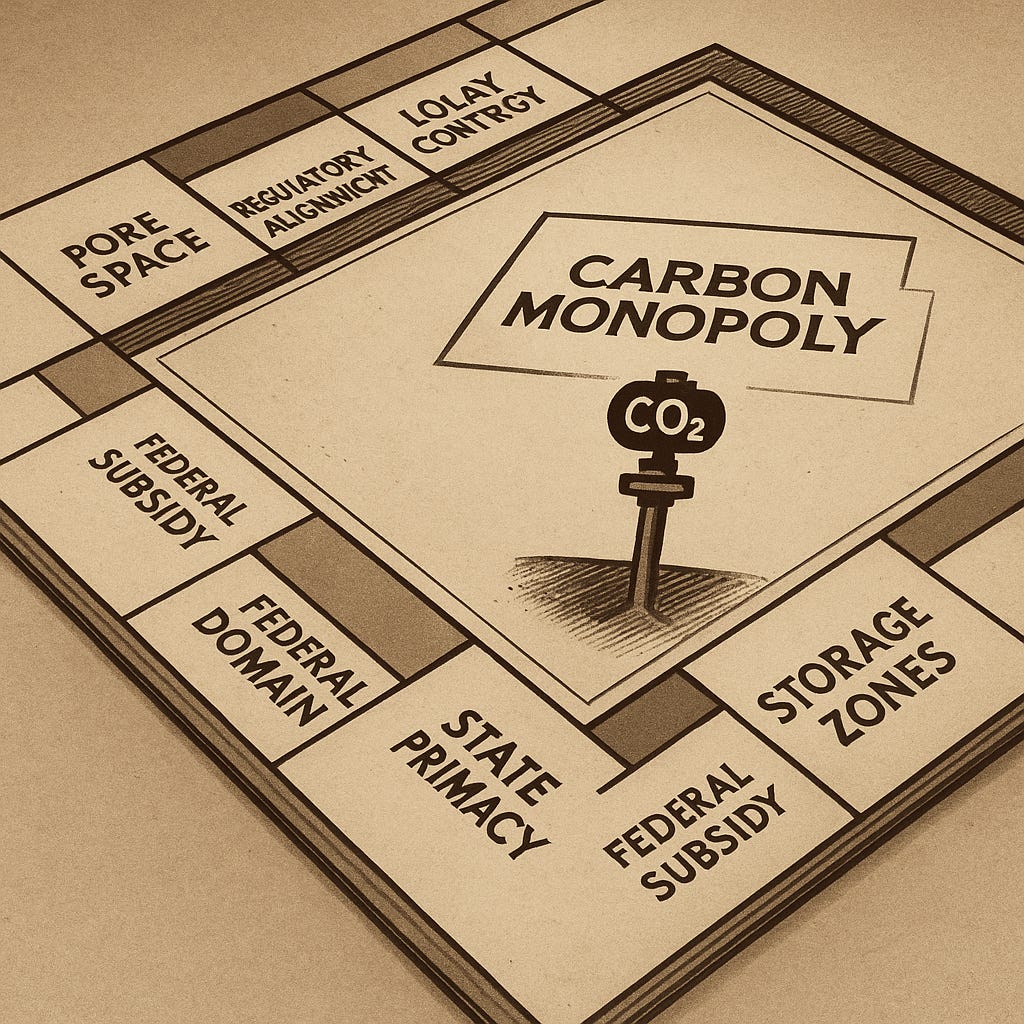
The DOE released two major studies authored by National Petroleum Council. The purpose: to modernize U.S. energy infrastructure, speed up federal permitting, and remove regulatory barriers that have delayed important energy and natural gas projects.
The studies reflect a broader initiative under what NPC calls “Future Energy Systems,” ordered by DOE Secretary Chris Wright
The first report, titled Reliable Energy: Delivering on the Promise of Gas‑Electric Coordination, analyzes how rising demand for both natural gas and electricity — combined with changing usage patterns — is putting stress on natural gas pipelines in key U.S. regions.
The second report, titled Bottleneck to Breakthrough: A Permitting Blueprint to Build, builds upon a prior 2019 NPC report, updating its recommendations given the current energy context.
Together, they accelerate the carbon management and 45Q credits
Below is a clear, energy-focused breakdown of how the NPC’s new recommendations directly impact carbon management, CO₂ pipelines, injection wells, storage hubs, and the 45Q economic ecosystem.
These recommendations accelerate the carbon-management buildout by aligning CO₂ infrastructure with oil-and-gas infrastructure rules — especially permitting, market need tests, and pipeline authorization.
They essentially shift CO₂ transport and storage into the same fast-lane framework historically used for natural gas and liquids pipelines.

Below is a deeper breakdown.
1. The NPC Report Treats CO₂ Transport as Critical Energy Infrastructure
Even though these reports focus on oil & natural gas, the underlying message applies directly to carbon management:
If the U.S. wants CCS, hydrogen, SAF, or industrial decarbonization — it must move CO₂ around like any other commodity.
The NPC is effectively saying:
“You can’t meet net-zero, reliability, or industrial goals without pipeline capacity — including CO₂ pipelines.”
This gives political and regulatory cover for:
CO₂ corridors
Multi-state pipeline networks
Cross-commodity rights-of-way
Shared gas–power–CO₂ planning
In other words, CO₂ pipelines are being normalized as required national infrastructure rather than special-case projects.
2. Permitting Reform = The Biggest Impact on CO₂ Pipelines & Storage Hubs
The second NPC report (Bottleneck to Breakthrough) is the most consequential for carbon management because it directly addresses:
✔ NEPA
✔ FERC authority
✔ Clean Water Act limits
✔ Timelines for federal approvals
✔ “Market need” requirements
These are the exact choke points currently slowing:
Summit Carbon Solutions
Trailblazer
Tallgrass CO₂ development
Denbury networks
Gulf Coast hub buildouts
Wyoming–Utah storage corridors
ND/TX Class VI well permitting strategies
The NPC recommendation — and DOE’s endorsement — is to fast-track every one of these processes.

3. The Market Need Recommendation Is Massive for 45Q projects
NPC wants to allow commercial agreements to serve as the official demonstration of market need.
That means:
If an ethanol plant signs a contract with a CO₂ pipeline operator → that alone could justify federal approval.
No need for:
Broader market economic studies
Proof of regional necessity
Traditional commodity-based demand tests
This is a direct gift to 45Q-driven pipeline developers.
It makes CO₂ a “federal priority commodity” whenever a project shows a private contract.
This is why the ethanol plants → Trailblazer → Tallgrass model matters in your other article:
once the contract exists, the economic need is “proven,” and the pipeline gets legal momentum.
4. Streamlined Permitting Helps CCS Storage More Than Anything Else
CCS storage hubs need three things:
Class VI well approvals
Pore-space access
Pipeline interconnects
NPC’s recommended reforms accelerate all three:
✓ Faster NEPA
Cuts environmental studies time — the biggest delay for Class VI wells, CO₂ trunklines, and hub development.
✓ Stronger federal preemption
Allows federal pipelines to override some state-level obstruction, which directly impacts CO₂ corridors.
✓ More authority for FERC
If CO₂ pipelines eventually fall under FERC jurisdiction (as many predict), NPC’s recommendation sets that table.
✓ Legal reforms on environmental appeals
This is the quiet part with the loud impact:
NPC wants shorter timelines for lawsuits and narrower judicial review windows, which reduces legal risk for CCS developers.
This directly helps companies like:
Summit Carbon Solutions
Navigator’s successors
Tallgrass
ExxonMobil’s CO₂ value chain
LanzaJet ethanol hubs
Air Liquide / Air Products
Occidental’s DAC hubs
5. Gas-Electric Coordination Has an Indirect but Important Impact
At first glance, the gas-electric report seems unrelated to carbon management, but it sets the table for:
CO₂ capture at gas power plants
CO₂ pipelines colocated with gas pipelines
Integrated planning that includes CO₂ flows
Most importantly:
NPC explicitly endorses new “fit-for-purpose infrastructure.”
That phrase is not accidental.
It is regulatory language that includes:
H₂-ready gas turbines
CO₂-ready pipelines
Dual-commodity corridors
Shared rights-of-way
This makes CCS part of the future grid reliability conversation, not just an industrial decarbonization tool.
6. Politically, This Shifts CCS From a Climate Policy to an Energy Security Policy
Before:
CCS was framed as a climate compliance strategy.
After NPC:
CCS is reframed as an asset for reliability, resilience, and national energy dominance.
That framing gives:
Broader bipartisan support
More durable funding
Less resistance within DOE
A deeper role in industrial policy
Cover for oil & gas companies to expand CCS as a business line
It also moves CCS rhetorically closer to the “strategic petroleum reserve” mindset:
not optional — essential.

7. The Big Meta-Impact: CO₂ Is Becoming a Federally Protected Commodity
This is the quiet shift no one in the national media is covering yet.
NPC’s recommendations signal that:
CO₂ transport is strategically important
CO₂ storage is a federally preferred land use
CO₂ movement qualifies for the same regulatory privileges as oil and gas
If you map this forward:
It positions CO₂ infrastructure the same way the U.S. treated pipelines in the shale boom.
And that has massive downstream effects on:
Eminent domain
Rights-of-way
Permitting speed
Insurance and liability
Long-term storage obligations
“Ownership” of 45Q flows
Whoever controls the CO₂ corridor controls the credit revenue.
NPC’s recommendations further cement that dynamic.
8. What This Means for Carbon Management
CO₂ pipelines and storage hubs are about to get faster approvals, more federal protection, fewer lawsuits, and clearer economic rules.
That means:
Faster buildout
More capital flow
Bigger pipeline networks
More ethanol/timber/cement/power capture deals
More pore-space pressure on landowners
Stronger federal preemption
Higher certainty of long-term projects
Which leads to the overarching conclusion:
NPC’s recommendations are an accelerant for the entire CCS industry — structurally, financially, and politically.
They don’t just “help” carbon management.
They redefine it as a core pillar of national energy infrastructure.
Kai Emerson is a journalist and policy analyst with over a decade of experience reporting at the intersection of corporate ethics, sustainability compliance, and stakeholder accountability. With a background in environmental economics and a sharp eye for regulatory nuance, Kai brings clarity to the often opaque world of ESG disclosures, boardroom behavior, and greenwashing red flags.
ESG University republishes their articles, features and stories online and/or in print under Creative Commons license CC BY-NC-ND 4.0.
Everyday your story is being told by someone. Who is telling your story? Who are you telling your story to?
Email your sustainable story ideas, professional press releases or podcast submissions to thecontentcreationstudios(AT)gmail(DOT)com.
CLICK HERE FOR SPECIAL PARAMOUNT + DISCOUNT LINK

This shift from treating CCS as climate policy to national energy infrastructure is huge for project certainty. The part about commercial agreements serving as market need justification basicly removes the biggest regulatory chokepoint for CO2 pipelines. What's clever is how NPC positioned this alongside gas-electric coordinaton, it gets bipartisan buy-in because reliability sells way better than decarbonization in most corridors.